Discover the Spain non lucrative visa 2025. Learn how to apply, meet financial requirements, and secure long-term residence in Spain.
The Spain non-lucrative visa is a long-term residence permit that allows non-EU nationals to live in Spain without engaging in any work activity, requiring proof of stable passive income and meeting strict health and legal criteria. Updated under Real Decreto 1155/2024, effective may 2025, the 2026 rules keep the core requirements consistent while standardizing two-year renewal permits. If you are a retiree, a person living off investments, or anyone with sufficient passive income, this is the primary legal route to long-term residence in Spain. The path from initial visa to permanent residency takes five years of continuous legal residence.
What are the financial and documentation requirements for the Spain non-lucrative visa 2026?
The 2026 income threshold is €28,800 per year for the main applicant, which equals €2,400 per month. Each dependent you bring adds €7,200 per year, or €600 per month, to that requirement. These figures are calculated at 400% and 100% of Spain’s IPREM index respectively. Meeting this threshold is the single most important factor in your application.

Accepted income types
Spain’s consulates accept a range of passive income sources to meet the threshold:
- Pensions (state, private, or occupational)
- Dividends from stocks or investment funds
- Rental income from properties you own
- Savings interest from bank accounts or bonds
- Royalties from intellectual property
The key word is passive. Income that requires active work does not qualify and will trigger a refusal.
Required documents
Every applicant must submit a complete document package. Missing even one item causes delays or outright rejection.
- Valid passport with at least one year of remaining validity
- Completed national visa application form
- Criminal record certificate covering the last 5 years, apostilled and translated into Spanish by a sworn translator
- Medical certificate confirming no contagious diseases, apostilled and translated
- Private health insurance from an EU-authorized insurer with full coverage and no co-payments
- Proof of financial means: bank statements, pension letters, dividend records, or investment account summaries
- Proof of accommodation in Spain: a signed rental contract, property deed, or a hosting declaration from a Spanish resident
Pro Tip: Consulates vary in exactly how they want documents formatted. Always check the specific requirements of the Spanish consulate in your country before you finalize your package, since a document that passes in one city may be rejected in another.
One of the most common application errors is submitting lump-sum savings as proof of income without showing regular monthly inflows. Consulates want to see stable, recurring income, not a one-time deposit. Health insurance policies with deductibles or co-payments are also routinely rejected. Verify your policy explicitly states zero co-payments before you submit.
How does the application and renewal process work?
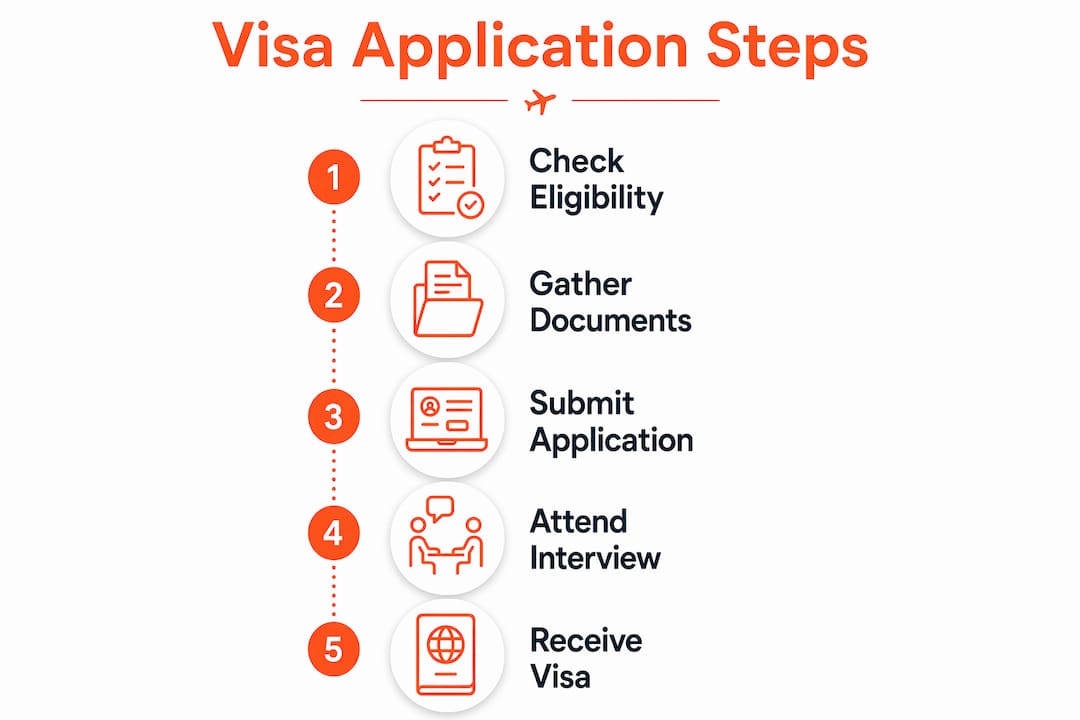
The non-lucrative residency visa for Spain follows a defined sequence. You cannot apply from inside Spain. Every application starts at the Spanish consulate in your country of legal residence.
- Book a consulate appointment. Appointment slots fill quickly, so plan at least two to three months ahead.
- Submit your full document package at the appointment. The consulate reviews your file and issues a decision, typically within one to three months.
- Enter Spain within the visa’s validity window, usually 90 days from issuance.
- Register your address (known as empadronamiento) at your local town hall within the first few weeks of arrival.
- Obtain your NIE number, the tax identification number required for almost every official transaction in Spain.
- Apply for your TIE card (Tarjeta de Identidad de Extranjero) at a local immigration office. This card is your physical proof of legal residence.
Visa validity and renewals
The initial non-lucrative visa is a Type D national visa valid for one year. After that first year, you renew inside Spain for successive two-year permits. Real Decreto 1155/2024 standardized these two-year renewal terms, which is a practical improvement over the previous one-year cycles.
| Stage | Duration | Where to apply |
|---|---|---|
| Initial visa | 1 year | Spanish consulate abroad |
| First renewal | 2 years | Immigration office in Spain |
| Second renewal | 2 years | Immigration office in Spain |
| Permanent residency | Eligible after 5 years | Immigration office in Spain |
Pro Tip: Submit your renewal application 60 days before expiry. Filing late risks a gap in your legal status, which can reset your residency timeline.
To qualify for renewal, you must prove you have lived in Spain for at least 183 days in the preceding year. You also need to re-demonstrate that your income still meets the current threshold. Permanent residency becomes available after five years of continuous legal residence, provided you have met the 183-day requirement each year.
What are the tax and legal implications of living in Spain on this visa?
Spending more than 183 days per year in Spain makes you a Spanish tax resident. That status means you owe Spanish income tax on your worldwide income, including pensions, dividends, and rental income from other countries. The Spanish tax return is filed using Modelo 100, and the rates are progressive.
The key legal obligations for non-lucrative visa holders are:
- File Modelo 100 annually, declaring all global income sources
- Report foreign assets over €50,000 using Modelo 720
- Pay Spanish wealth tax if your net assets exceed the regional threshold
- Maintain private health insurance throughout your stay
The “Beckham Law” tax regime, which caps income tax at a flat 24% for new residents, is not available to non-lucrative visa holders. That regime applies to workers and certain investors. If you hold this visa, you pay standard progressive Spanish income tax rates on your worldwide income from day one of tax residency.
The work prohibition is absolute. Any gainful work, including remote work for a foreign employer or client, violates the visa conditions and can result in cancellation. This is the most misunderstood rule attached to this permit.
How does the non-lucrative visa compare to other Spanish long-term visas?
Spain offers several long-term residence routes, and choosing the wrong one wastes time and money. The non-lucrative visa is the right choice only if you have no intention of working in any form.
| Visa type | Work permitted | Key requirement | Best for |
|---|---|---|---|
| Non-lucrative visa | No | Passive income ≥€28,800/year | Retirees, financially independent persons |
| Digital Nomad Visa | Yes (remote only) | Lower income threshold | Remote workers, freelancers |
| Golden Visa | Yes (under conditions) | Qualifying investment | High-net-worth investors |
The Digital Nomad Visa carries a lower income threshold and explicitly permits remote work for non-Spanish clients. If you earn income through any form of employment or freelance activity, that is the correct route. The Golden Visa requires a significant financial investment in Spain, such as real estate above a set value, and grants broader work rights.
Pro Tip: If you are unsure which visa fits your situation, a detailed visa comparison can save you months of wasted preparation on the wrong application.
The non-lucrative visa suits retirees drawing pensions, people living off investment portfolios, and anyone whose income requires no active work. If your income source is even partially tied to active work, this visa will be refused or later cancelled.
Key Takeaways
The Spain non-lucrative visa 2026 requires proof of at least €28,800 per year in passive income, a clean criminal record, private health insurance with no co-payments, and a strict commitment to no work activity of any kind.
| Point | Details |
|---|---|
| Income threshold | Main applicant needs €28,800/year; each dependent adds €7,200/year. |
| No work allowed | Remote work for foreign employers also violates the visa and risks cancellation. |
| Renewal timing | Submit renewal 60 days before expiry and prove 183+ days of residence per year. |
| Tax residency | Spending 183+ days in Spain triggers worldwide income tax obligations under Modelo 100. |
| Path to permanency | Five years of continuous legal residence makes you eligible for permanent residency. |
What I tell every applicant before they start
The single biggest mistake I see is people treating the work prohibition as a gray area. It is not. I have spoken with applicants who assumed that working remotely for a U.S. company while living in Spain was fine because “the money comes from abroad.” That reasoning gets visas cancelled. The Spanish immigration authorities do not care where your employer is based. If you are performing work and receiving compensation, you are working. The Digital Nomad Visa exists precisely for that situation.
The second mistake is underestimating consulate variation. Two applicants with identical documents can get different outcomes at different consulates because each office applies its own formatting preferences and evidence standards. I always recommend calling or emailing the specific consulate before you finalize your package. That one step prevents the most common rejections.
The third thing I stress is financial presentation. Consulates want to see regular monthly income, not a large savings balance. A pension statement showing €2,500 per month landing in your account is far more persuasive than a bank statement showing €100,000 sitting in savings. If your income comes from dividends or rental income, present it as a monthly average with supporting documentation going back at least six months.
Finally, start earlier than you think you need to. Apostilles take time. Sworn translations take time. Consulate appointments fill up weeks or months in advance. Applicants who start three months before their intended move date almost always run into problems. Six months is a safer minimum.
— Joshua
How Digitalnomadinspain can support your application
Preparing a non-lucrative visa application correctly the first time matters more than most applicants realize. Digitalnomadinspain offers end-to-end support for the full non-lucrative visa application process, from eligibility assessment and document preparation to consulate appointment coordination and post-arrival registrations like NIE and TIE.
The team at Digitalnomadinspain works with applicants from over 50 countries and carries a 98% success rate, built on deep knowledge of Spanish immigration law and the procedural updates introduced under Real Decreto 1155/2024. Processing times run approximately 30% faster than self-managed applications. If you want to confirm your eligibility before committing to the full process, the eligibility checker gives you a clear starting point in minutes.
FAQ
What is the income requirement for the Spain non-lucrative visa in 2026?
The main applicant must show at least €28,800 per year (€2,400 per month) in passive income. Each additional dependent requires a further €7,200 per year.
Can I work remotely on the Spain non-lucrative visa?
No. Remote work for any employer or client, regardless of where that employer is based, is prohibited under this visa. The Digital Nomad Visa is the correct permit for remote workers.
How long does the non-lucrative visa last before renewal?
The initial visa is valid for one year. After that, renewals are granted in two-year increments inside Spain, with permanent residency available after five continuous years of legal residence.
When should I apply for a renewal?
Submit your renewal application at least 60 days before your permit expires. You must also prove you spent at least 183 days in Spain during the preceding year.
Does living in Spain on this visa make me a tax resident?
Yes. Spending more than 183 days in Spain in a calendar year makes you a Spanish tax resident, which means you must declare your worldwide income using Modelo 100.