
Discover the essential digital nomad visa requirements for Spain in 2026. Apply confidently with our detailed guide on income, documents, and more!
Spain’s digital nomad visa, formally known as the Ley de Startups residence permit for remote workers, requires a minimum monthly income of €2,849, proof of remote employment or freelance work, and a set of apostilled official documents to qualify for legal residency. The visa authorizes non-EU nationals to live in Spain while working for foreign employers or clients. Getting the criteria wrong at any stage is the most common reason applications fail. This guide covers every requirement precisely, from income thresholds and document preparation to renewal rules and tax obligations, so you can apply with confidence.
What are the digital nomad visa requirements for income and employment?
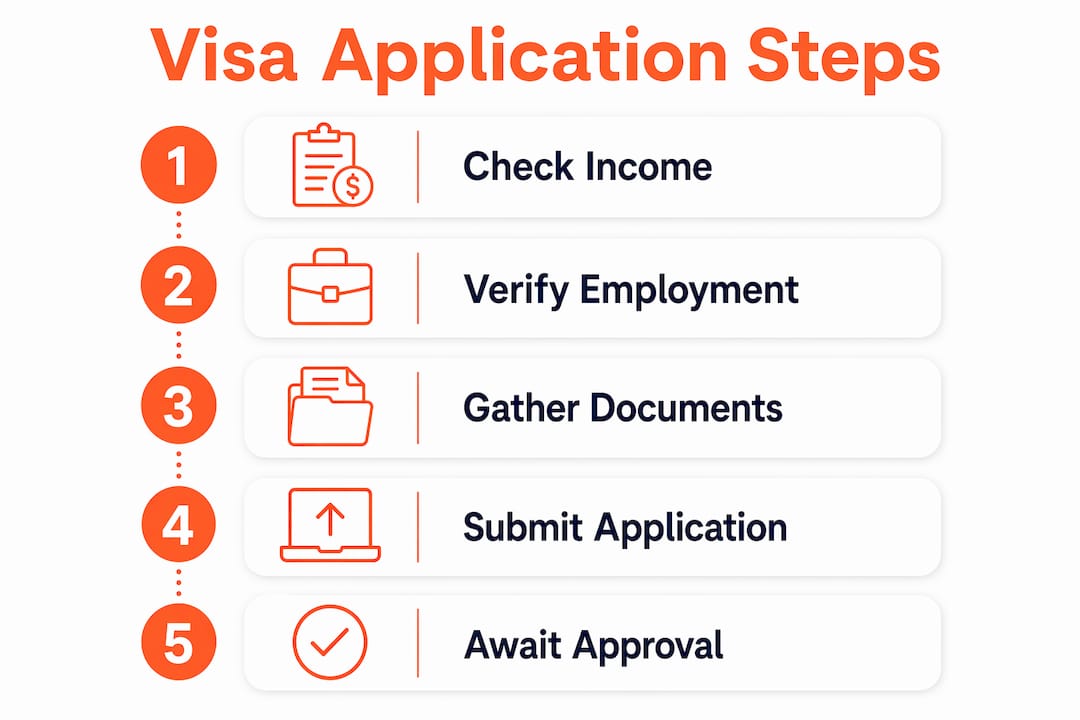
The minimum monthly income for the primary applicant is €2,849 as of 2026. That figure is calculated as 200% of Spain’s Minimum Wage, and Spanish immigration authorities verify it through bank statements, tax returns, and employment contracts.
Family members added to the application raise the threshold. The first spouse or dependent requires an additional amount equal to approximately 75% of Spain’s Minimum Wage, roughly €850 per month. Each additional dependent adds around 25%, or approximately €280 per month. These figures scale with the size of your household, so calculate your total requirement before gathering income evidence.
The visa accepts three employment structures:
- Salaried employee working remotely for a foreign company
- Freelancer or independent contractor serving clients outside Spain
- Company owner directing a foreign-registered business remotely
The 80/20 income rule is the most misunderstood criterion. No more than 20% of your total income may come from Spanish clients. Exceeding that threshold disqualifies the application. You must document the geographic source of your income, not just the total amount.
Pro Tip: Bank statements alone rarely satisfy income verification. Pair them with a signed employment contract or client invoices that clearly show the foreign origin of payments.
Applicants must also prove professional qualifications through a university degree, professional certificate, or at least 3 years of documented professional experience. This requirement confirms that the remote work is skilled and genuine, not informal labor.
Which documents are required for a Spain digital nomad visa application?
Document preparation is where most applications slow down or fail. Spanish immigration authorities require a specific set of papers, and each must meet strict formatting and authentication standards.
- Valid passport. Your passport must be valid for the entire intended stay, with at least two blank pages for stamps. Expired or nearly expired passports cause immediate rejection.
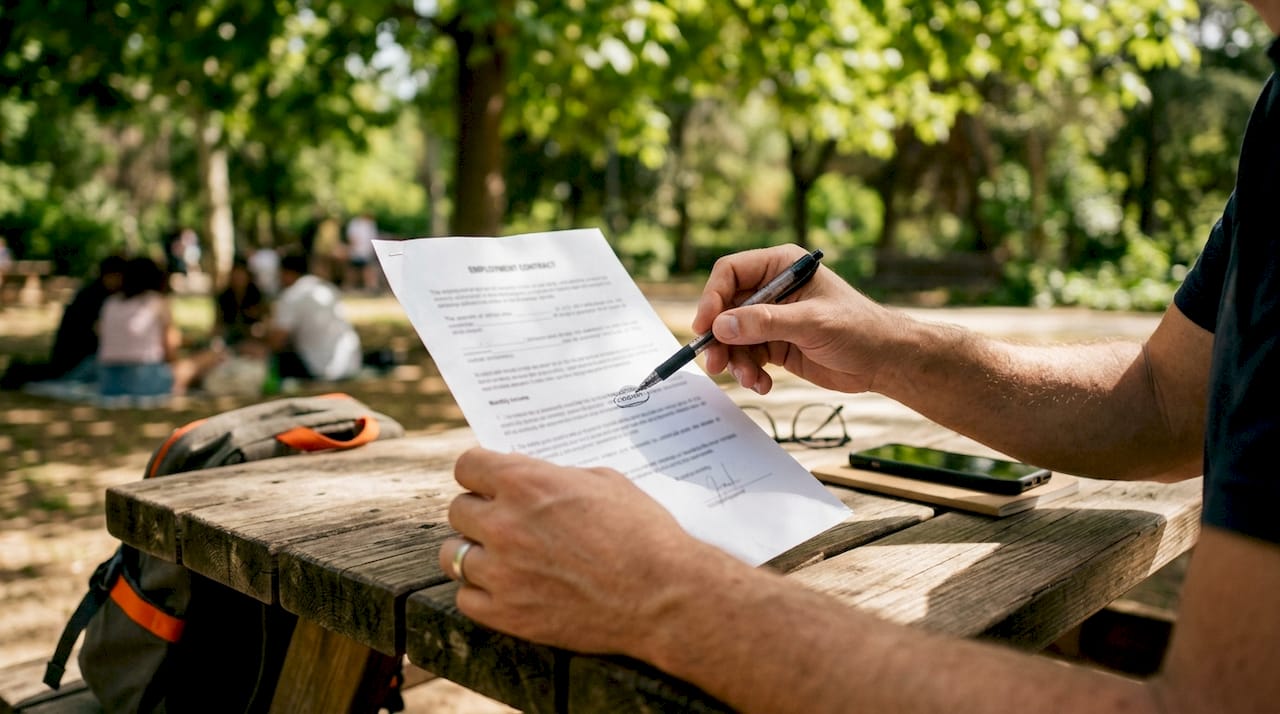
- Employment or freelance contract. The contract must confirm remote work for a foreign employer or client, specify your role, and show your monthly compensation. Freelancers should provide signed client agreements or a portfolio of invoices.
- Proof of professional qualifications. A university degree, professional certification, or documented work history covering at least three years satisfies this requirement.
- Private health insurance. The policy must cover the full territory of Spain with no co-payment gaps. Spanish public health coverage does not apply to visa applicants at this stage.
- Criminal background check with apostille. This document must come from every country where you have lived for more than six months in the past five years. The apostille authentication of criminal records is mandatory. A notarized translation alone does not meet Spanish immigration standards.
- Proof of accommodation. A rental contract, property deed, or letter from a host confirms your address in Spain.
Pro Tip: Request your criminal background check the moment you decide to apply. Apostille processing adds 2–4 weeks to your timeline, and some countries take longer. Starting this step late is the single most common cause of application delays.
The entire document set must be current. Criminal records older than three months are typically rejected. Health insurance must be active on the date of submission, not just purchased. Translations into Spanish must be certified by a sworn translator, not a general translation service.
How long is the Spain digital nomad visa valid, and what are the renewal conditions?
The initial residence permit runs for 1–3 years depending on whether you apply from outside Spain (visa route) or inside Spain (residence permit route). The key renewal and duration facts are:
- The initial visa issued at a Spanish consulate abroad is typically valid for one year.
- The residence permit applied for inside Spain can be granted for up to three years.
- You may renew the permit for a total stay of up to five years, provided you continue to meet income and insurance requirements.
- Renewal applications require updated income documentation, a current health insurance policy, and a clean criminal record.
- Staying in Spain for five years of legal residence opens a path to long-term EU residency status.
Tax residency is a separate matter from visa validity. The 183-day rule determines Spanish tax residency, not the visa itself. Crossing that threshold in a calendar year subjects your worldwide income to Spanish progressive income tax rates. Plan your annual days in Spain carefully if you want to avoid triggering full tax residency in the first year.
What mistakes should you avoid when applying for the digital nomad visa?
Most application failures trace back to a small set of predictable errors. Knowing them in advance gives you a real advantage.
- Misreading the 80/20 rule. Applicants who earn consulting income from Spanish companies, even occasionally, risk exceeding the 20% Spanish income cap. Review every income source before applying.
- Using an Employer of Record arrangement. EOR contracts involving Spanish entities are frequently rejected. Authorities treat them as disguised local employment. A direct contract with a foreign employer is far safer.
- Submitting outdated criminal records. Documents older than three months at the time of submission are invalid. Time your request so the apostilled record arrives within the validity window.
- Missing apostille authentication. A notarized translation is not a substitute. Apostille certification from the issuing country’s competent authority is the only accepted format.
- Starting too late. Gathering contracts, insurance, criminal records, apostilles, and translations realistically takes 4–6 months. Starting the week you decide to move guarantees delays.
Disguised local employment is the primary reason Spain’s immigration authorities deny digital nomad visa applications. If your contract routes through a Spanish entity, even a foreign-owned one with Spanish operations, authorities may classify your work as local employment and reject the application outright.
Pro Tip: If your employment situation is complex, such as a hybrid freelance and salaried setup, consult an immigration attorney before submitting. A rejected application creates a record that can complicate future attempts.
How does tax residency interact with the digital nomad visa?
The digital nomad visa grants the right to live and work in Spain. It does not automatically make you a Spanish tax resident. Those are two distinct legal statuses, and confusing them creates serious financial exposure.
Spanish tax residency is triggered by the 183-day physical presence rule. Spend more than 183 days in Spain in a calendar year and you become a tax resident. Tax residents pay Spanish progressive income tax on their worldwide income, not just earnings from Spanish sources.
Key tax considerations for digital nomad visa holders include:
- Spain has tax treaties with many countries that prevent double taxation. Check whether your home country has a treaty with Spain before assuming you owe taxes in both places.
- The Beckham Law, a special tax regime for new residents, may allow you to pay a flat 24% rate on Spanish-sourced income for up to six years. Eligibility conditions apply and must be assessed individually.
- If you plan to spend fewer than 183 days in Spain per year, you may retain tax residency in your home country. Document your travel carefully.
- Consulting a local tax advisor before your first full year in Spain is not optional. Misinterpreting the 183-day tax residency rule leads to unexpected liabilities that are difficult to unwind.
For practical guidance on managing finances as a new resident, the banking in Spain guide from Digitalnomadinspain covers account setup and financial planning for expats.
Key Takeaways
Spain’s digital nomad visa requires a minimum monthly income of €2,849, proof of genuine remote work for foreign clients, and a complete set of apostilled documents submitted well before your intended move date.
| Point | Details |
|---|---|
| Income threshold | Primary applicants must earn at least €2,849 per month, with additional amounts for each family member. |
| The 80/20 income rule | No more than 20% of total income may come from Spanish clients; exceeding this disqualifies the application. |
| Document apostille | Criminal background checks must carry apostille certification; notarized translations alone are rejected. |
| Visa duration and renewal | Initial permits last 1–3 years and are renewable up to a total of five years with continued compliance. |
| Tax residency trigger | Spending more than 183 days in Spain in a calendar year activates full Spanish tax residency on worldwide income. |
What I have learned from watching applicants get this wrong
Most people who struggle with this visa do not fail because they lack qualifications. They fail because they underestimate how literal Spanish immigration authorities are about documentation.
I have seen applicants with strong incomes and legitimate remote jobs get rejected because their criminal record arrived two weeks past the three-month validity window. I have seen freelancers denied because one client happened to be a Spanish company, pushing them just over the 20% threshold. These are not edge cases. They are routine.
The EOR issue is the one that surprises people most. Remote workers who use Employer of Record platforms to receive their salary often assume the arrangement is straightforward. Spanish authorities do not see it that way. If the EOR entity has any Spanish presence, the contract can look like local employment. The non-lucrative visa vs. digital nomad visa comparison is worth reading if you are unsure which permit fits your employment structure.
My honest advice: treat the 4–6 month preparation window as a hard minimum, not a suggestion. The apostille process alone can take a month in some countries. Add translation time, insurance shopping, and contract review, and the timeline fills up fast. Applicants who start early almost always succeed. Applicants who rush almost always find something missing.
— Joshua
How Digitalnomadinspain can support your application
Preparing a complete, compliant digital nomad visa application takes time, legal knowledge, and attention to detail that most first-time applicants underestimate.
Digitalnomadinspain works with applicants from over 50 countries, handling document preparation, eligibility assessment, and application review from start to finish. The service carries a 98% approval rate and processes applications approximately 30% faster than self-applicants, according to Digitalnomadinspain. Start with the eligibility checker to confirm your income and employment situation qualifies, then review the full digital nomad visa service page for a complete breakdown of what the process involves. Booking a consultation early gives you the clearest path to approval without last-minute document scrambles.
FAQ
What is the minimum income for Spain’s digital nomad visa?
The minimum monthly income is €2,849 for the primary applicant as of 2026, with additional amounts required for each accompanying family member.
Can freelancers apply for Spain’s digital nomad visa?
Yes. Freelancers qualify as long as at least 80% of their income comes from foreign clients and they can document their contracts, invoices, and professional qualifications.
How long does it take to gather all required documents?
Realistically, 4–6 months from the decision to apply, primarily because apostille certification of criminal records adds 2–4 weeks and documents have strict validity windows.
Does the digital nomad visa make you a tax resident in Spain?
No. The visa grants residency rights, but Spanish tax residency is triggered separately by spending more than 183 days in Spain in a calendar year.
Can I use an Employer of Record contract to qualify?
EOR arrangements involving Spanish entities are frequently rejected. Direct contracts with foreign employers or clients are the recommended structure for a successful application.